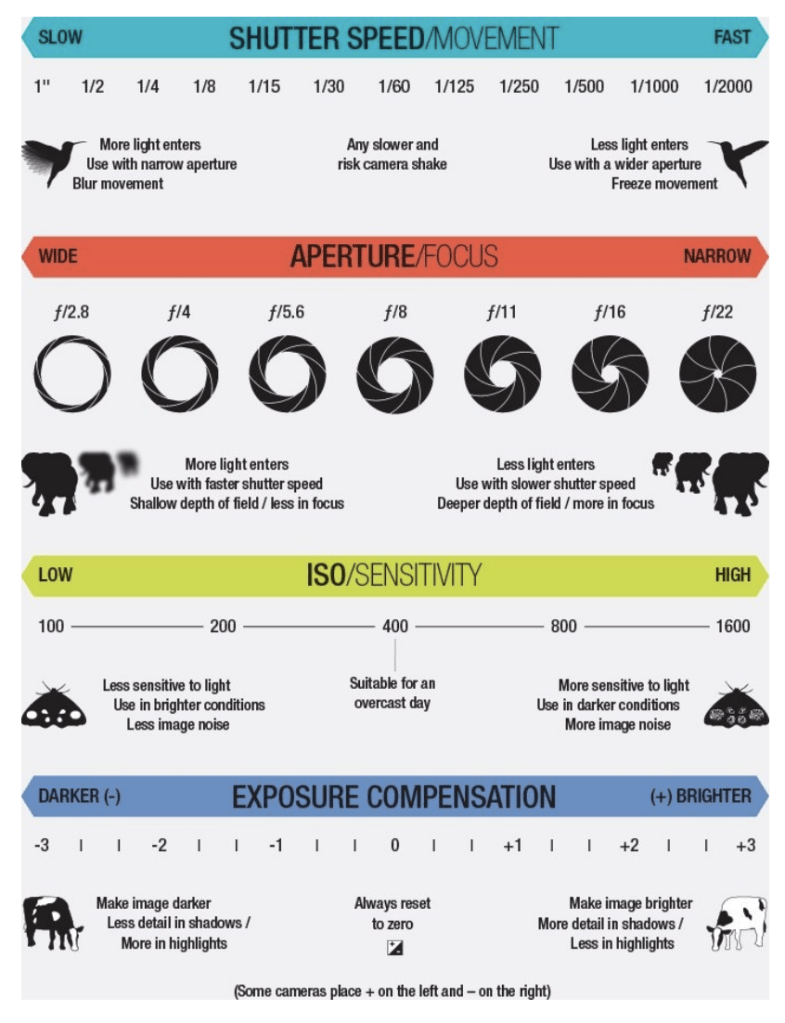
A photograph’s exposure determines how light or dark an image will appear when it’s been captured by a camera. This is determined by three camera settings: aperture, ISO and shutter speed (the “exposure triangle”).

A camera’s aperture setting controls the area over which light can pass through your camera lens. It is specified in terms of an f-stop value, which can at times be counterintuitive, because the area of the opening increases as the top decreases.
Shutter speed is used to control motion. A faster shutter speed will stop motion, and the faster the subject is moving, the faster the shutter speed must be to accomplish this.
The ISO speed determines how sensitive the camera is to incoming light. Similar to shutter speed, it also correlates 1:1 with how much the exposure increases or decreases. However, unlike aperture and shutter speed, a lower ISO speed is almost always desirable, since higher ISO speeds dramatically increase image noise.
References:
- Cambridgeincolour.com. (2019). Camera Exposure: Aperture, ISO & Shutter Speed. [online] Available at: https://www.cambridgeincolour.com/tutorials/camera-exposure.htm [Accessed 16 Dec. 2019].
- Cox, S. (2019). What Is Exposure? (A Beginner’s Guide). [online] Photographylife.com. Available at: https://photographylife.com/what-is-exposure [Accessed 16 Dec. 2019].
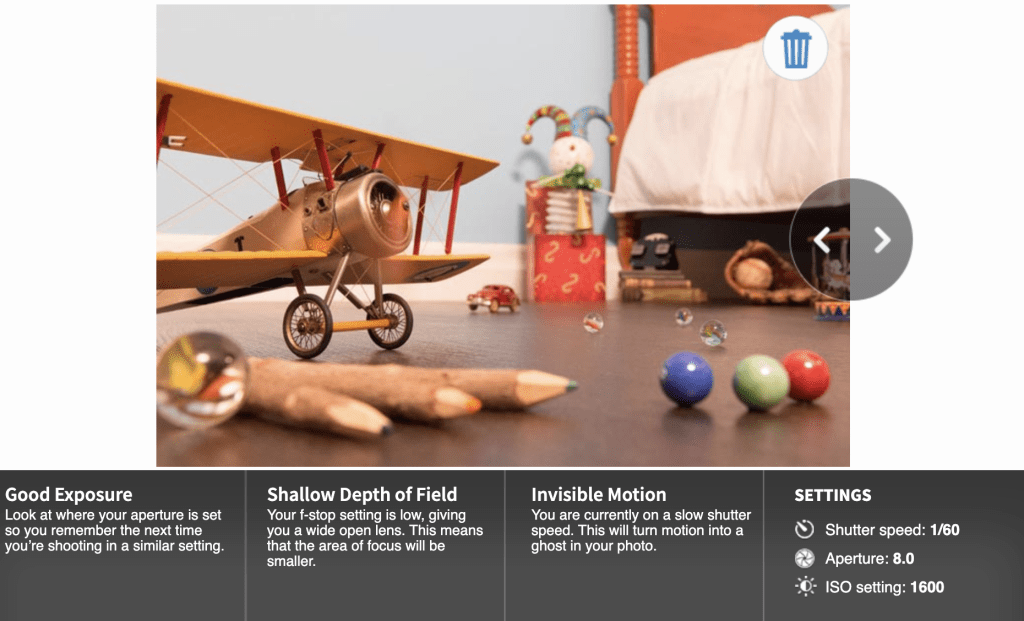
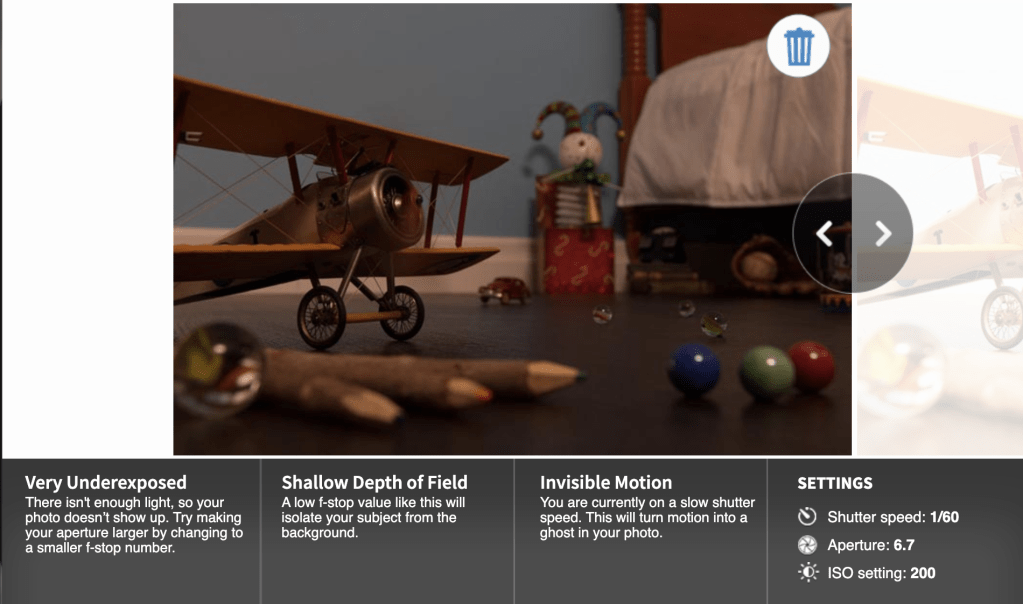
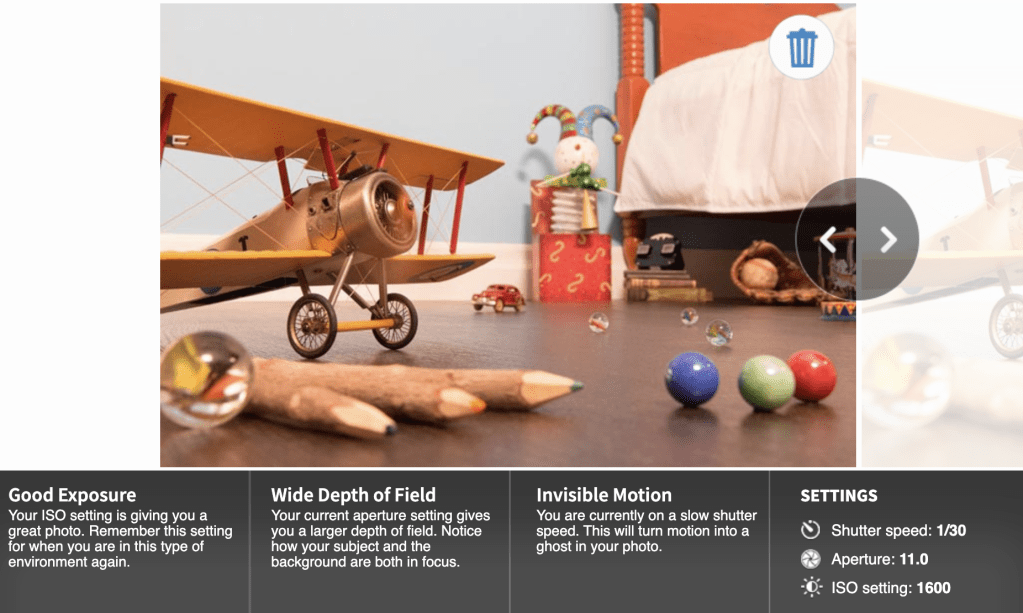
To test my knowledge, regarding exposure settings I used a canon based website. [http://www.canonoutsideofauto.ca/play/] .
 Marians Blogs :)